
Handmade vs Factory-Made Vietnam Pots: What Every Buyer Should Know
Updated: Aug 17
Table of Contents:
When you start browsing Vietnam pot suppliers, you'll eventually hit this question: handmade or factory-made? And the marketing language around it gets thick. "Authentic handmade artisan ceramics" versus "precision factory production."
Here's the real answer: both can be exceptional quality. The difference isn't quality—it's production method, design consistency, customization flexibility, and what aesthetic you're actually after. Understanding these tradeoffs helps you source strategically instead of assuming handmade automatically equals premium.
This guide cuts through the marketing noise and explains what handmade and factory-made actually mean in Vietnam ceramics—and when each approach works best for your business.

Defining Handmade vs Factory-Made
Let us start with clear definitions, because the terminology can be misleading.
What "Handmade" Actually Means
In Vietnam pot production, "handmade" typically means:
Hand-thrown on the wheel: A ceramicist sits at a pottery wheel, centers the clay, and shapes the pot by hand as the wheel spins. This ancient technique is still practiced in villages like Bat Trang, where families have been throwing pots for centuries.
Hand-finished and decorated: After the basic form is thrown, artisans hand-apply glazes, carve surface details, add relief decoration, or hand-paint finishes. Each piece gets individual attention.
Fired in traditional kilns: Many handmade pieces, especially prestigious ones, are fired in dragon kilns—wood-fired kilns that have been in use for centuries. The firing process itself contributes to the aesthetic: color variation, surface texture, subtle imperfections that characterize handmade ceramics.
Slower production: Because each piece is individually formed, production is deliberate. A skilled potter produces 10–20 pieces per day, versus a factory producing hundreds.
Individual variation: Handmade pots are never identical. That variation is intentional and valued—it proves human creation.
What "Factory-Made" Actually Means
"Factory-made" sounds industrial, but in Vietnam ceramics, it's more nuanced:
Mold-cast or wheel-thrown at scale: The basic form is created using molds or wheels, but in a dedicated production facility. Larger factories use plaster molds to cast multiple copies of the same design. Still craft-based—the molds are carved by skilled artisans—but faster than hand-throwing.
Standardized production process: Quality control protocols ensure consistency. Each pot in a 500-piece order will be extremely similar in size, wall thickness, and finish.
Modern firing in gas kilns: Factory production typically uses gas kilns rather than wood-fired ones. This allows precise temperature control and consistent results.
Finishing by hand or machinery: Glazes might be applied by hand spray or automated systems. Smaller details hand-carved; larger decorative elements press-molded.
High production volume: A factory can produce thousands of pieces weekly, depending on size and complexity.
Systematic quality control: Inspection catches defects before items leave the facility.
Here's the important part: Factory-made does NOT mean low-quality or non-artisan. Many Vietnam factories employ experienced ceramicists who oversee production, select materials, and refine glazes. The difference is scale and standardization, not craft level.
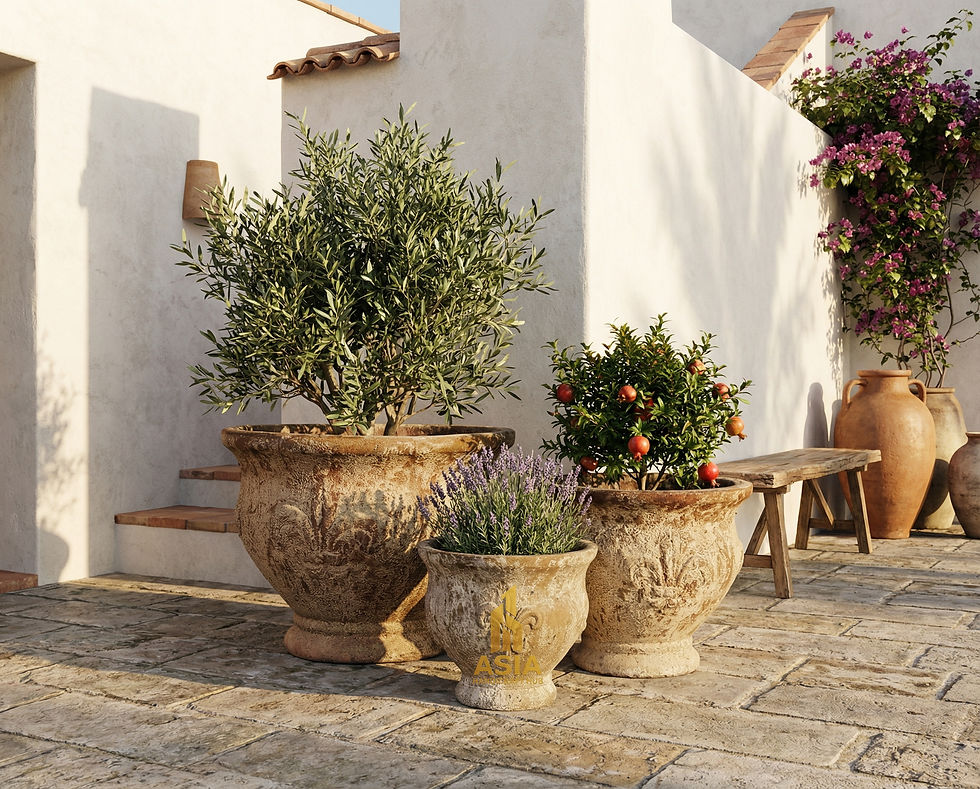
Head-to-Head Comparison: When to Choose Each
Understanding the genuine tradeoffs helps you select wisely.
Production Speed and Lead Time
Handmade: Slower. A custom order of 20 handmade pieces takes 6–8 weeks of production time alone, plus kiln cooling and shipping.
Factory-made: Faster. A 500-piece order enters an existing production queue and might be completed in 4–6 weeks if the design is in the standard catalog.
Verdict: If you need pots quickly (under 4 months), factory-made or ready-stock is essential. Handmade requires long-term planning.
Cost and Pricing
Handmade: Higher wholesale cost. A handmade ceramic urn might wholesale at $80–$150, even at volume.
Factory-made: Lower wholesale cost. The same design, factory-produced, might wholesale at $40–$80.
Why: Handmade involves artisan labor. Factory production achieves economy of scale.
Verdict: If budget is tight, factory-made delivers better margins. If you are targeting premium market and can charge accordingly, handmade's higher cost is offset by higher retail pricing.
Customization and Design Flexibility
Handmade: Highly flexible. Want a pot in a custom size? Custom color glaze? Specific hand-painted decoration? A handmade producer can create a prototype and small production run (even 5–10 pieces).
Factory-made: Less flexible. Custom work requires mold-making (expensive upfront) and minimum orders. Want a custom size? Expect a $500–$2,000 mold-making fee plus a 50-piece minimum order.
Verdict: For design-driven or bespoke projects, handmade is superior. For catalog-based or volume sourcing, factory-made standardization is an advantage, not a limitation.
Quality and Durability
Handmade: Exceptional durability when produced by experienced artisans. Hand-thrown walls are often thicker and more even than factory pieces. However, quality varies with the individual artisan's skill.
Factory-made: Consistent quality. Modern testing and QC mean factory pots meet standardized durability specs. Less variation, but lower risk of individual defects.
Verdict: Both can be high-quality. Handmade quality depends on the artisan; factory quality depends on the facility's standards. Trust the producer more than the production method.
Aesthetic and Character
Handmade: Visible human signature. Slight asymmetries, natural glaze gradations, surface variation. This is the aesthetic designers specifically seek.
Factory-made: More uniform. Shapes are consistent. Glazes are evenly applied. This reads as "cleaner" and more contemporary.
Verdict: For design-forward or artisan-positioned work, handmade wins. For minimalist or contemporary applications, factory-made's uniformity is an asset.
Minimum Order Quantities
Handmade: Flexible, often quite small. Order 5 handmade pieces in a custom design. Order 1 of each size for variety.
Factory-made: Higher MOQ. Typically 200–500 pieces per design (though lower MOQ trading companies exist).
Verdict: For small importers or test orders, handmade is more accessible. For garden centers or high-volume buyers, factory MOQ is expected.
Production Consistency Across Orders
Handmade: Variable. If you reorder the same design 6 months later, the new batch might look slightly different — different glaze variation, slightly different dimensions. This is natural for handmade.
Factory-made: Identical. Reorder the same design, and you get pots that match previous batches exactly.
Verdict: If consistency across orders matters (retail chain, hotel network), factory-made is superior. If variety and uniqueness matter, handmade's natural variation is an advantage.

Quick Reference: Handmade vs Factory-Made
Factor | Handmade | Factory-Made |
Lead time | 5–8 months | 3–5 months |
Per-unit cost | $50–$300 | $20–$100 |
Customization flexibility | Very high | Limited (mold costs) |
Quality consistency | High (if skilled artisan) | Very high (systematic QC) |
Aesthetic character | Visible handwork, variation | Clean, uniform, contemporary |
Design flexibility | Excellent | Good (catalog) |
MOQ flexibility | Very flexible (5–20 pieces) | Moderate (100–500 pieces) |
Reorder consistency | Variable (natural variation) | Identical |
Ideal market | Design, premium, boutique | Volume, retail, commercial |
Which Should You Choose? A Buyer Profile Guide
If You Are a Designer or Design Firm
If You're a Designer or Design Firm
Choose handmade. The visible artisan character, aesthetic variation, customization flexibility—these align with what design clients value and what differentiates premium interiors. Handmade pots become signature elements in your work.
Plan 5–6 months ahead and budget accordingly. The investment pays off in design impact and client differentiation.
If You Run a Garden Center
Choose factory-made for core volume, handmade for specialty. Your bread-and-butter sales are standard terracotta and glazed pots in classic sizes. Factory production handles this efficiently at the volumes you move.
For smaller accent pieces or gift-quality collections (hand-painted ceramics, specialty designs), add handmade selections. This gives you a sophisticated range without slowing down your core inventory.
Recommended split: 70% factory-made core inventory, 30% handmade specialty items.
If You're a Landscape or Hospitality Buyer
Choose factory-made. You need reliability, consistency, and the ability to reorder identical pieces across multiple installations. A hotel chain needs every location's courtyard to look the same. A landscaping contractor needs to deliver consistent results.
Factory production, with standardized specs and quality control, is the right choice.
If You're an Importer or Distributor
Choose both. Build a dual-source model:
Factory sourcing for your core catalog: bestselling sizes and colors, high-volume items, consistent reorders
Handmade sourcing for limited-edition collections: exclusive designs, seasonal specials, designer collaborations
This positioning—offering both commodity basics and artisan specialties—lets you serve multiple market segments.
If You Run a Retail Boutique or Lifestyle Store
Lean handmade. Your customers are shopping for distinctive, meaningful pieces, not generic containers. Handmade pots, with visible craft and individual character, are exactly what boutique customers seek.
The higher wholesale cost is offset by higher retail pricing and stronger customer connection to artisan-made products.

The Secret Most Suppliers Won't Tell You: It's Usually Hybrid
Here's something that'll shift how you think about this: most Vietnam pots are actually neither purely handmade nor purely factory-made. They're hybrid.
A "handmade" pot from Bat Trang might be hand-thrown on the wheel (handmade), but the rim is mechanically finished (factory process), the glaze is spray-applied (mechanical), and it's fired in a modern gas kiln (factory infrastructure).
A "factory-made" pot might have its basic form created in a mold (factory), but experienced artisans hand-apply glaze, carve surface details, and inspect each piece individually before packing (handmade processes).
The distinction is less about pure production method and more about where the artisan input is concentrated.
Artisan-focused pots: Significant hand-shaping and hand-decoration. The artisan's individual choice and skill shape the final product.
Efficiency-focused pots: Basic form achieved through standardization or molding. Finishing is careful but less individually variable.
Understanding this nuance helps you ask better questions: "Where is the hand-finishing concentrated? Which steps are artisan-controlled? Which are standardized?"
Better Questions to Ask Your Supplier
Instead of asking "Is it handmade or factory-made?", ask these more revealing questions:
"How is the basic form created?" Wheel-thrown? Mold-cast? Hand-slab built? This tells you about the fundamental production method.
"Where does hand-finishing occur?" Glaze application? Carving? Decoration? This shows where artisan input concentrates.
"What percentage of pieces are individually inspected versus spot-checked?" This indicates quality control rigor.
"Can you show me production photos at each stage?" Professional producers provide these. Transparency matters.
"How much variation should I expect between pieces?" If they say "none," that's factory-made. If they say "slight natural variation is part of the design," that's handmade.
"If I reorder, how consistent will the new batch be?" This clarifies production consistency.
These questions reveal far more than the simple "handmade or factory" label.
Pricing the Difference
When comparing handmade and factory-made options, calculate the real impact on your margin:
Scenario 1: Garden Center Terracotta Pots
Factory-made wholesale: $2.50 per pot
Handmade wholesale: $5.00 per pot
Retail price: $12.99
Factory margin: $10.49 per pot (79% margin) Handmade margin: $7.99 per pot (62% margin)
By volume (1,000 pots), factory-made generates $10,490 gross margin; handmade generates $7,990. The factory-made option is more lucrative for high-volume retail.
Scenario 2: Premium Ceramic Pots for Design
Factory-made wholesale: $40 per pot
Handmade wholesale: $90 per pot
Retail/installed price: $200 per pot (designer markup)
Factory margin: $160 per pot (80%) Handmade margin: $110 per pot (55%)
But here is the design angle: a designer can charge a $50 design fee per handmade pot (custom sourcing, artisan curation) that does not apply to factory pots. Suddenly, handmade becomes $160 total margin.
The pricing strategy differs based on how you position and sell the product.
The Future: Where Vietnam Pots Are Headed
Both handmade and factory-made Vietnam pots are growing. The market isn't consolidating toward one or the other.
Handmade is growing because consumers increasingly value authenticity, craft, and artisan-made products. Sustainability and cultural preservation narratives support handmade sourcing.
Factory-made is growing because modern consumers also value consistency, affordability, and design clarity. Contemporary design trends favor clean, uniform aesthetics.
The smart buyer sources from both traditions, matching each to its appropriate market application.
Ready to Source Handmade or Factory-Made Vietnam Pots?
Both represent genuine value. Neither is inherently superior — they serve different purposes and different customer bases.
For handmade sourcing: work with artisan-focused producers who can flex on customization and celebrate the visible handcraft in marketing.
For factory-made sourcing: work with quality-focused manufacturers who systematize production without sacrificing skill.
For hybrid sourcing: partner with trading companies that curate both — factory basics and artisan specialties in a single supplier relationship.
Asia Handicraft Hub sources both handmade and factory-made Vietnam pots. We work directly with artisan producers in Bat Trang and high-quality factories in Binh Duong. Our curated collections let you choose pieces that match your aesthetic and business model.
Get started:
Learn more about Vietnam pots:
Frequently Asked Questions
Is handmade pottery always better than factory-made?
No. Both can be high-quality. Handmade offers aesthetic character and customization flexibility; factory-made offers consistency and affordability. Choose based on your market and business model, not on assumptions about quality.
Why are handmade Vietnam pots cheaper than custom local artisans?
Handmade Vietnam pots leverage lower labor costs, established infrastructure, and ceramic expertise developed over centuries. A handmade Vietnamese pot at $80 represents genuine artisan labor; equivalent custom work from a US artisan would cost $200+.
Can I order handmade pots in small quantities?
Yes. Many handmade producers accept orders of 5–20 pieces. Factory MOQ is typically higher (100–500 pieces). Small-quantity flexibility is one of handmade's advantages.
Will handmade pots vary significantly from order to order?
Yes, natural variation is part of handmade production. If you reorder, expect slight differences in glaze color, surface texture, and dimensions. This is expected and valued. If exact replication matters, factory-made is more consistent.
Can factory-made pots be customized?
Limited customization is possible (custom color, slightly modified size), but it requires mold-making and higher MOQ. For significant customization, handmade is more flexible.
Is factory-made better for high-volume retail?
Yes. Factory MOQ, production speed, and cost efficiency make factory-made ideal for garden centers, retailers, and other high-volume buyers. Handmade is better for lower-volume, design-driven sourcing.
How do I know if a pot is truly handmade vs factory-made?
Ask the supplier directly. Request production photos. True handmade pots show variation and visible hand-shaping. Factory-made pots are more uniform. Reputable suppliers are transparent about production methods.
What is the lead time difference between handmade and factory-made?
Handmade: 5–8 months. Factory-made: 3–5 months. For ready-stock inventory, both can ship within 2–4 weeks if items are already produced.
Can I mix handmade and factory-made in a single order?
Yes. Many trading companies consolidate both — a partial container of handmade pieces plus factory-made volume in a single shipment. This allows you to source diverse aesthetics in one order.
Which is better for hotels and commercial installations?
Factory-made is typically better. Consistency across multiple locations, reliability of supply, and ability to reorder identically are critical for hospitality projects. Handmade variation, while beautiful, can be challenging for corporate uniformity requirements.
Asia Handicraft Hub sources both handmade and factory-made Vietnam pots directly from artisan producers and quality manufacturers. We help buyers understand the production methods, choose the right approach for their business, and source strategically. Contact us to discuss your handmade and factory-made sourcing strategy.


Comments