
Vietnam Terracotta Pots vs Ceramic Pots: Which Is Right for Your Business?
Updated: Aug 17
Table of Contents:
You're sourcing pots from Vietnam. And at some point, every wholesale buyer, garden center owner, and importer hits the same wall: terracotta or glazed ceramic?
Both are good products. Both come from the same country, the same artisan tradition, and both sell well internationally. But they're not interchangeable. They serve different customers, move at different times of year, and support completely different margin strategies. Getting this wrong means dead inventory or missed opportunity.
This guide compares the two across six factors that actually affect your business — not just material specs, but margin logic, freight economics, and what your customers are actually buying.

Understanding What You Are Actually Buying
The terminology gets muddled quickly, so let's clear it up.
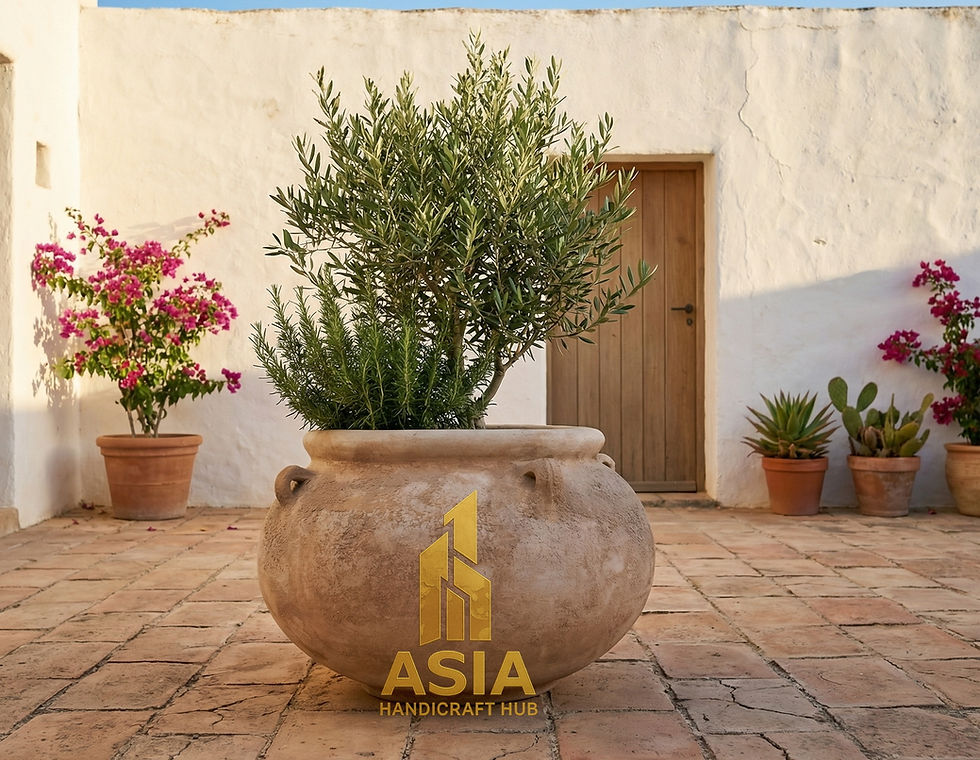
Terracotta is low-fired clay with natural iron oxide, which produces that warm red-orange color. Firing happens around 1,000°C, low enough that the clay stays porous. Water and air move through the pot walls. That porosity is the whole point — it's why terracotta has been used for plants for thousands of years. Roots get oxygen, soil drains, waterlogging doesn't happen. The aesthetic is earthy, honest, and rustic.
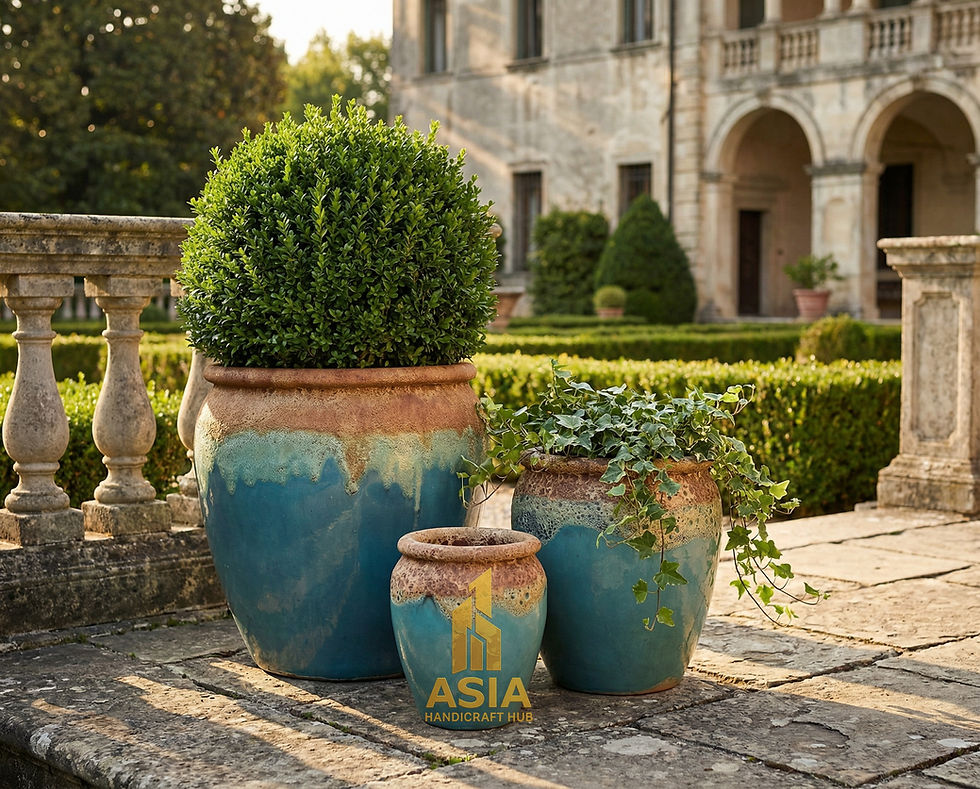
Glazed ceramic starts with a clay body — earthenware, stoneware, or a blend — coated with mineral glaze and fired at higher temperatures (up to 1,300°C). The glaze seals everything. Nothing passes through the walls. That sealed surface is what makes ceramic non-porous and what opens up its design range: hundreds of colors, finishes, and textures are possible. Vietnam's dragon wood kilns produce the subtle surface variations — slight color shifts, natural gradations — that give Vietnamese ceramic its premium, handmade character.
The simplest way to remember the difference: terracotta is natural and breathable; ceramic is sealed and decorative.
Vietnam Terracotta Pots vs Ceramic Pots: The 6 Factors That Drive the Buying Decision
Here is where the real buying decision happens. We compare both materials across six factors that directly impact your bottom line, your inventory turns, and your customer satisfaction.
1. Plant Performance and Breathability
Winner: Terracotta for plant health.
Terracotta wins here, and it's not close.
If someone is actually growing something in this pot, terracotta's porous walls regulate soil moisture in a way ceramic simply can't match. Succulent growers, herb enthusiasts, and serious plant collectors reach for terracotta because their plants do better in it — not for aesthetic reasons.
Ceramic retains moisture. That's fine for orchids, ferns, or tropical species that want consistently wet roots. But for the broad middle of the houseplant and garden market, terracotta's breathability is a real practical advantage.
Who this matters for: plant nurseries, garden centers, customers building indoor plant collections. If your buyer is a hospitality procurement manager choosing lobby pots, plant performance is irrelevant — go ceramic.
2. Aesthetic and Design Range
Winner: Ceramic for versatility; terracotta for specific aesthetics.
Terracotta gives you one color family. Warm red-brown to orange, with natural variation from the kiln. That's it. But within that constraint, it fits a lot of strong design trends — Japandi, Mediterranean, cottagecore, bohemian, botanical. The limitation is also the appeal.
Vietnamese glazed ceramic has almost no ceiling on design. Matte, high-gloss, textured, hand-painted, relief-carved, monochromatic, gradient — the range is genuinely wide, and Vietnamese ceramicists are skilled at executing ustom finishes. This is why ceramic has become the default choice for interior designers and premium retail buyers: it can flex to any season, any trend.
Who this matters for: if your customer has one clear aesthetic, terracotta's simplicity serves them without needing a 50-SKU assortment. If they want variety and trend-responsiveness, ceramic is the only category that delivers it.
3. Durability and Weather Resistance
Winner: Ceramic for harsh climates; terracotta for mild climates.
The issue with terracotta outdoors in cold regions is freeze-thaw cycles. Water enters the porous clay, freezes, expands, and cracks the pot from inside. In Wisconsin in February, this is a real problem. In Southern California, it never happens.
Ceramic, being high-fired and sealed, doesn't have this vulnerability. Water can't penetrate, so there's nothing to freeze and expand. For commercial outdoor installations, hotel gardens, or any situation where pots stay outside in cold weather year-round, ceramic is the practical choice.
That said — terracotta ages in a way ceramic doesn't. The surface develops a patina over years that many buyers and customers genuinely prefer to the look of a new pot. Some customers specifically seek out weathered terracotta for that reason.
Who this matters for: cold-climate retail and commercial landscaping skew toward ceramic. Warm-region garden centers can lean on terracotta without worrying.
4. Shipping Weight and Freight Costs
Winner: Terracotta is slightly lighter. The difference is smaller than you'd expect.
This factor matters most when you are importing full containers of large pots.
A terracotta pot is roughly 10–15% lighter than an equivalent ceramic pot, because the porous clay is less dense. On a full container of large pots, that adds up — lower freight cost per unit, slightly better economics.
However, this advantage matters far less than you might think for several reasons. First, the difference in wholesale unit price for ceramic typically covers any freight cost difference. Second, for smaller pots (under 30cm), the weight difference is negligible. Third, if you are using a ready-stock supplier like Asia Handicraft Hub, you are not managing the full-container economics anyway — you are buying already-imported inventory at a competitive all-in price.
Who this matters for: buyers importing multiple full containers of large-format terracotta annually will see real savings. For most wholesale buyers, freight weight shouldn't be the deciding factor.

5. Wholesale Price and Retail Margin
Winner: Terracotta is cheaper to buy. Ceramic is priced at a premium. Both can be profitable — differently.
Terracotta has a lower production cost (lower firing temperature, simpler glaze process, less labor per piece) which translates to a lower wholesale price. This creates an attractive scenario for garden centers, nurseries, and high-volume retailers: you can buy terracotta at competitive wholesale pricing and mark it up for strong volume margin during peak seasons.
Glazed ceramic costs more to produce (higher kiln temperatures, complex glazing, more hand-finishing) which means higher wholesale pricing. The retail price point is also higher. But the per-unit margin — in percentage terms — is typically similar to terracotta. The difference is that ceramic drives a different margin strategy: higher price per unit, lower volume, but premium positioning and stronger absolute per-unit profit.
Real-world pricing context: A wholesale terracotta pot might cost you $3–5 per unit and retail for $12–18. A wholesale ceramic pot might cost $6–12 per unit and retail for $25–40. Both can deliver healthy margins — the choice depends on whether you are building a business on volume or on premium per-unit profit.
Who this matters for: garden centers with high spring traffic build margin on terracotta volume. Design-led boutiques and premium retailers build margin on ceramic unit economics.
6. Market Demand and Sellability
Winner: Terracotta peaks in spring and summer. Ceramic sells year-round.
Terracotta demand is heavily seasonal, anchored to the spring and summer garden season. Search volume spikes, retail traffic increases, and garden centers stock aggressively during March through August. It is a volume business with predictable seasonal peaks.
Glazed ceramic has more consistent year-round demand. It sells strongly in spring/summer for outdoor garden use, but it also maintains steady sales in fall and winter for indoor décor, gifting (Q4), holiday entertaining, and interior design projects. The seasonal variation is less dramatic, making ceramic a more stable inventory category across the year.
Both categories are growing. The global garden décor market continues to expand, and the "artisan origin" trend — where customers specifically seek handmade products with traceable provenance — is benefiting Vietnamese handmade ceramics across both categories.
Who this matters for: if your calendar is built around spring season, terracotta is a must-have. If you want to reduce seasonal inventory risk and maintain consistent sell-through year-round, ceramic balances your catalog.

Quick Reference: Terracotta vs Ceramic at a Glance
Factor | Terracotta | Glazed Ceramic |
Plant breathability | Excellent | Low (non-porous) |
Design range | Limited (natural tones) | Very wide (all colors/finishes) |
Weather resistance | Good (mild climates) | Very Good (all climates) |
Shipping weight | Medium | Medium–Heavy |
Wholesale price | Lower | Higher |
Retail margin strategy | Volume-driven | Premium per-unit |
Peak demand season | Spring/Summer | Year-round |
Ideal buyer type | Garden centers, nurseries | Décor retail, designers |
Which Type Is Right for Your Business?
The answer is not "one or the other" — it is usually "both, in different proportions."
If you run a garden center or plant nursery: Terracotta is your foundation. It is what customers expect to find, what plants perform best in, and what drives margin through seasonal volume. Supplement with a curated ceramic collection (20–30% of your pot inventory) for customers seeking decorative statement pieces or indoor use. Recommended split: 65–70% terracotta, 30–35% ceramic.
If you are a wholesale importer or distributor: Terracotta gives you fast-moving basics and healthy volume margin. Ceramic opens premium price points, differentiates your catalog, and appeals to interior designers and high-end retailers. A mixed container strategy — combining both in a single shipment — lets you test both categories with minimal risk.
If you supply interior designers or commercial landscaping projects: Ceramic is your primary focus. The design range, the surface quality, the visible artisan character — these align with what design-led customers are seeking. Large format ceramic urns and statement planters are consistently popular with this segment.
If you run a retail store or lifestyle boutique: Lead with ceramic for your decorative and gifting ranges — the design versatility and premium aesthetic support your positioning. Use terracotta strategically in your plant accessories and garden lifestyle sections. The artisan origin story of Vietnamese handmade ceramics is a genuine retail asset — communicate it at point of sale and on your packaging.
Why Source Both from Vietnam?
Vietnam produces terracotta and ceramic at genuine artisan scale, with consistent quality and competitive wholesale pricing. The country's pottery tradition runs deep — there are category specialists across both material types, so quality doesn't drop when you mix your sourcing.
At Asia Handicraft Hub, we source both Vietnam terracotta pots and glazed outdoor ceramics directly from artisan workshops. Our curated range means quality-controlled inventory without managing factory relationships yourself — which, for most wholesale buyers, is the real advantage over direct sourcing.
Ready to source both categories?
Or read more about Vietnam pots in our comprehensive sourcing guides:
Frequently Asked Questions
Are terracotta pots better than ceramic pots for plants?
For most plants, yes. Terracotta's breathability prevents root rot and allows oxygen exchange. Ceramic is non-porous and better suited to plants that prefer consistently moist soil, or purely decorative use without a plant.
What is the difference between terracotta and ceramic pots?
Terracotta is low-fired, porous clay with a natural red-orange color. Ceramic is glazed clay fired at higher temperatures, producing a sealed, waterproof surface in any color or finish.
Which pots are better for outdoor use — terracotta or ceramic?
Ceramic is more weather-resistant in freeze-thaw climates. Terracotta performs beautifully in mild climates and ages with character over time. Choose based on your local climate.
Where are terracotta pots made in Vietnam?
Terracotta production is concentrated in Binh Duong province (industrial scale) and craft villages like Bat Trang (artisan handmade). Bien Hoa also produces high-quality terracotta and ceramic blends.
Can I source both terracotta and ceramic from the same Vietnamese supplier?
Yes. Most established Vietnamese pottery suppliers and trading companies work with both categories. Mixed containers combining both types are a common approach for testing demand and building balanced inventory.
Asia Handicraft Hub specializes in wholesale Vietnam pots sourced directly from artisan workshops. We supply terracotta, ceramic, and handcrafted décor to garden centers, retailers, landscapers, and interior designers worldwide. Contact us to discuss your sourcing needs.

Comments