
How to Source Outdoor Ceramic Planters and Terracotta Pots from Vietnam: A Complete B2B Buyer’s Guide
Updated: Aug 17
Table of Contents:
The global demand for outdoor ceramic planters, terracotta pots, and decorative garden pottery continues to grow as consumers invest more in landscaping, outdoor living spaces, hospitality projects, and urban gardening. For garden retailers, wholesalers, importers, and sourcing companies, choosing the right manufacturing partner has become increasingly important in maintaining both product quality and competitive pricing.
Among Asia’s leading pottery manufacturing countries, Vietnam has emerged as one of the most attractive sourcing destinations for outdoor planters and ceramic products. Vietnamese factories are known for combining traditional craftsmanship with scalable production capabilities, making the country highly appealing for international B2B buyers.
Today, buyers are not only searching for reliable wholesale terracotta pot suppliers in Vietnam, but also looking for custom outdoor ceramic planters, modern planter styles, sustainable manufacturing practices, and materials that perform well in different climates.
As a Vietnamese pottery manufacturer, Asia Handicraft Hub works with global garden retailers, importers, wholesalers, and home décor brands looking for export-quality outdoor planters and customized pottery collections from Vietnam.
This guide explores everything wholesale buyers and garden retailers need to know about sourcing outdoor ceramic planters and terracotta pots from Vietnam, including supplier selection, pricing comparisons, trending planter styles, material comparisons, and sustainability considerations.
Why Vietnam Is a Leading Manufacturing Hub for Outdoor Planters
Vietnam has become a globally recognized production center for pottery and outdoor ceramic planters thanks to its combination of skilled craftsmanship, abundant natural clay resources, export-ready manufacturing infrastructure, and competitive production costs.
For international garden retailers and importers, Vietnam offers an ideal balance between quality, design flexibility, and pricing.
Vietnam’s Growing Reputation in Global Pottery Exports
Vietnam has a long history of ceramic and pottery production, with traditional pottery villages developing techniques that have been refined for generations. Over the past decade, Vietnamese manufacturers have increasingly adapted these traditional skills to meet modern international market demands.
Today, Vietnam exports a wide range of pottery products, including:
Outdoor ceramic planters
Terracotta pots
Glazed garden pottery
Lightweight polystone planters
Decorative ceramic home décor
Handmade pottery collections
Many Vietnamese factories now supply garden centers, landscaping companies, hospitality projects, and home décor retailers across North America, Europe, Australia, and the Middle East.
Key Advantages of Sourcing Pottery from Vietnam
Companies such as Asia Handicraft Hub help international buyers simplify the sourcing process by connecting product development, manufacturing coordination, export packaging, and customization support into a more streamlined B2B supply chain experience.
Competitive Manufacturing Costs
Compared to several other manufacturing countries in Asia, Vietnam remains highly competitive in terms of labor costs and production efficiency. This allows buyers to source premium-looking outdoor planters while maintaining healthy retail margins.
Skilled Craftsmanship
Vietnamese pottery production combines machine-assisted consistency with handmade craftsmanship. This is especially valuable for buyers looking for artisan-inspired collections with consistent export quality.
Strong Customization Capabilities
Many Vietnamese factories offer OEM and private-label manufacturing services, allowing garden retailers to develop exclusive planter collections with custom shapes, colors, glaze finishes, and branding.
Diverse Product Styles
Vietnamese suppliers produce a broad range of planter styles, from rustic terracotta collections to modern minimalist glazed ceramics and lightweight contemporary planters.
Export Experience
Experienced Vietnamese pottery manufacturers understand international export requirements, including packaging standards, palletization, container optimization, and durability considerations for overseas shipping.
How to Find Reliable Wholesale Terracotta Pot Suppliers in Vietnam

Finding the right supplier is one of the most important steps for wholesale buyers importing pottery products.
A reliable supplier should not only offer attractive pricing but also demonstrate consistent quality control, production reliability, and strong export experience.
What Makes a Terracotta Pot Supplier Reliable?
Consistent Product Quality
Reliable suppliers maintain consistency across product batches. This includes stable dimensions, consistent clay color, uniform surface texture, and dependable firing quality.
Export Manufacturing Experience
Factories with international export experience typically have better packaging systems, stronger production management, and greater familiarity with retailer expectations.
Quality Control Systems
Professional suppliers inspect products throughout the production process to minimize cracking, glaze defects, drainage issues, and shipping damage.
Communication and Responsiveness
Fast communication and clear technical understanding are critical in B2B sourcing relationships. Reliable suppliers provide detailed quotations, production updates, and clear documentation.
Strong Packaging Standards
Outdoor ceramic planters are fragile products that require proper export packaging. Suppliers should use reinforced carton systems, protective materials, and container-loading strategies that reduce breakage risk.
Questions Buyers Should Ask Before Placing Bulk Orders
Before committing to a supplier, wholesale buyers should evaluate:
Minimum order quantities (MOQ)
Production lead times
Available customization services
Frost resistance performance
Water drainage design
Material composition
Packaging specifications
Sample policies
Quality assurance processes
Requesting production samples before mass manufacturing is highly recommended, especially for custom projects.
Warning Signs Buyers Should Avoid
Not all suppliers maintain professional export standards.
Buyers should be cautious when suppliers:
Provide inconsistent product photos
Cannot explain manufacturing processes clearly
Offer unrealistically low pricing
Have weak packaging standards
Lack export references
Avoid discussing quality control procedures
In outdoor pottery sourcing, extremely low prices often lead to higher long-term costs through product defects, breakage, or inconsistent production quality.
Vietnam Wholesale Terracotta Pot Prices Compared to Other Asian Countries
Pricing remains one of the main reasons global buyers source outdoor planters from Asia.
However, comparing wholesale pottery pricing between countries requires more than simply evaluating unit costs.
Factors That Influence Outdoor Planter Pricing
Several manufacturing factors impact planter pricing:
Raw Materials
Clay quality, additives, and glaze materials significantly affect production costs and durability.
Production Methods
Hand-finishing techniques, firing temperatures, and surface treatments all influence labor requirements and pricing.
Kiln Technology
Modern kiln systems improve consistency and durability but may increase production costs.
Packaging Requirements
Export-grade packaging adds cost but helps reduce shipping damage.
Product Size
Large outdoor planters require more raw material, labor, and freight space.
Vietnam vs Other Asian Manufacturing Countries
Vietnam
Vietnam offers a strong balance between craftsmanship, pricing, customization flexibility, and export quality.
China
China remains highly competitive in mass production capacity but may involve higher minimum orders and less flexibility for smaller custom projects.
Thailand
Thailand is known for decorative ceramics and premium finishes but often operates at higher pricing levels.
Indonesia
Indonesia has strong artisan pottery production but may offer less consistency for large-scale retail programs.
Why Lowest Price Should Not Be the Main Priority
Cheaper products may initially appear attractive but can create problems later through:
High breakage rates
Weak frost resistance
Poor glazing consistency
Color variations between batches
Retail customer complaints
For long-term retail success, product durability and consistency are often more valuable than minimal upfront savings.
Where to Find High-Quality Outdoor Ceramic Planters for Wholesale
High-quality outdoor ceramic planters are designed to combine aesthetic appeal with long-term outdoor durability.
For wholesale buyers, understanding what defines quality is essential when evaluating manufacturers.
What Defines High-Quality Outdoor Ceramic Planters?
Durable Clay Composition
The quality of the clay body directly affects planter strength, water absorption levels, and resistance to cracking.
High-Temperature Kiln Firing
Higher firing temperatures generally produce stronger and more weather-resistant pottery products.
Weather-Resistant Glaze
Outdoor ceramic planters should use glazes that resist UV exposure, moisture penetration, and temperature fluctuations.
Proper Drainage Design
Drainage holes are critical for plant health and outdoor planter performance.
Structural Stability
Well-manufactured planters maintain their shape and durability over time, even in demanding outdoor environments.
Popular Outdoor Ceramic Planter Finishes
At Asia Handicraft Hub, outdoor planter collections are developed to align with evolving garden retail trends across North America, Europe, and Australia, where buyers increasingly prioritize both aesthetics and long-term outdoor durability.
Vietnamese manufacturers produce a wide variety of finishes suitable for different retail markets.
Glossy Glazed Ceramics
Glossy glazed pottery remains popular for contemporary garden retail collections due to its vibrant colors and premium appearance.

Matte and Sand Finishes
Minimalist and Scandinavian-inspired planter collections often feature neutral matte surfaces and textured finishes.
Rustic Terracotta
Natural terracotta continues to attract buyers seeking warm, earthy aesthetics.
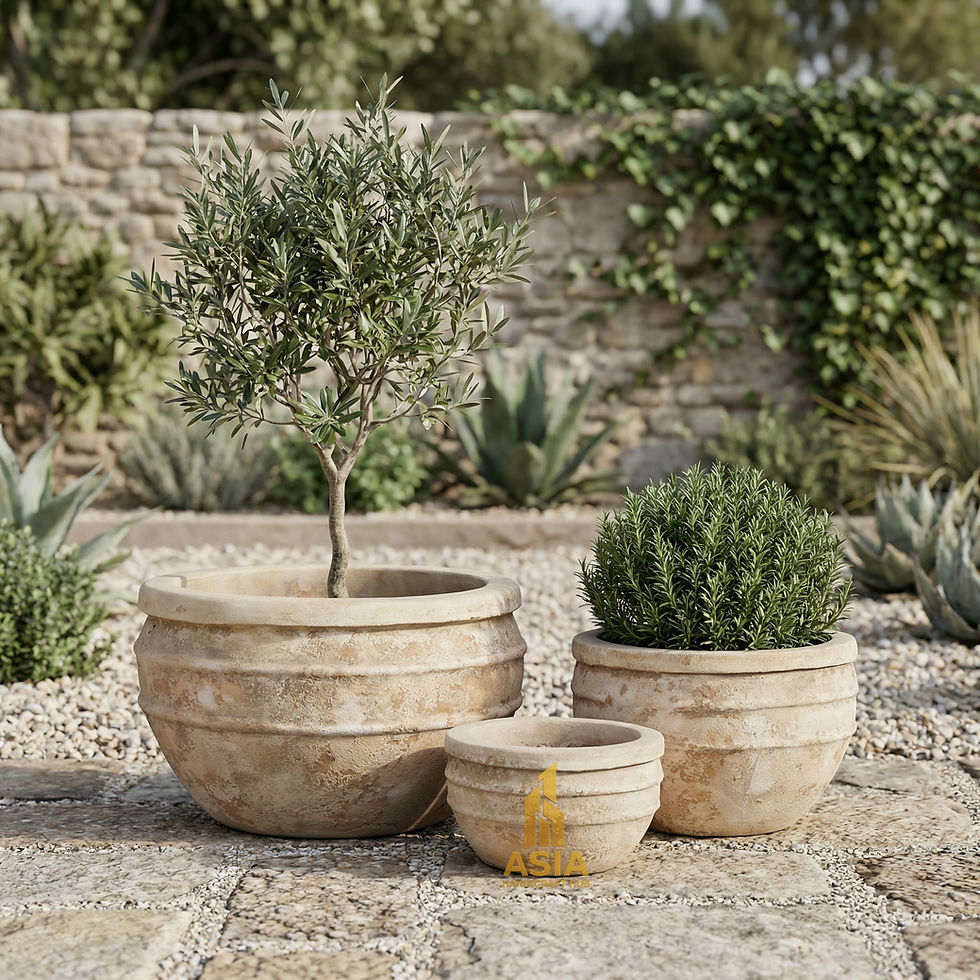
Aged Patina Finishes
Vintage-inspired finishes with weathered textures are increasingly popular in premium outdoor décor collections.

Custom Outdoor Ceramic Planters for Garden Retailers
Customization has become one of the biggest competitive advantages in modern garden retail.
Rather than selling generic planter collections, many retailers now develop exclusive designs tailored to their customer base.
Why Retailers Invest in Custom Planter Collections
Custom collections help retailers:
Differentiate from competitors
Increase brand recognition
Improve retail margins
Create exclusive seasonal collections
Strengthen customer loyalty
Common Customization Options Available from Vietnamese Suppliers
Asia Handicraft Hub supports custom planter development for garden retailers and importers seeking exclusive outdoor pottery collections tailored to their target markets.
Custom Shapes and Sizes
Factories can produce planters in a wide range of dimensions and silhouettes, including tall cylinders, bowl planters, cubes, and oversized statement pieces.
Glaze Development
Custom glaze colors and textures allow retailers to align products with regional market trends.
Logo Embossing and Branding
Private-label manufacturing often includes logo applications and customized packaging.
Packaging Customization
Retail-ready packaging and barcode labeling can simplify import and retail operations.
How OEM Pottery Manufacturing Works
The OEM production process typically includes:
Product concept discussion
Technical drawing review
Sample development
Mold creation
Production approval
Mass manufacturing
Export packaging and shipment
Working with experienced suppliers helps streamline this process and reduce production risks.
Outdoor Ceramic Planter Styles That Are Most Popular in Garden Retail
Outdoor planter trends continue evolving as consumers focus more on landscaping, outdoor living, and home styling.
Understanding current style preferences helps buyers select collections with stronger retail potential.
Modern Minimalist Planters
Modern minimalist collections remain highly popular in contemporary retail markets.
Typical features include:
Neutral colors
Clean geometric shapes
Matte finishes
Smooth surfaces
Scandinavian-inspired aesthetics
These products perform especially well in urban and contemporary home décor markets.
Rustic Terracotta and Mediterranean Styles
Rustic terracotta pottery continues to maintain strong global appeal.
Buyers often seek:
Handmade textures
Natural clay colors
Traditional Mediterranean-inspired forms
Earth-tone finishes
These collections are particularly attractive for garden centers and outdoor lifestyle retailers.
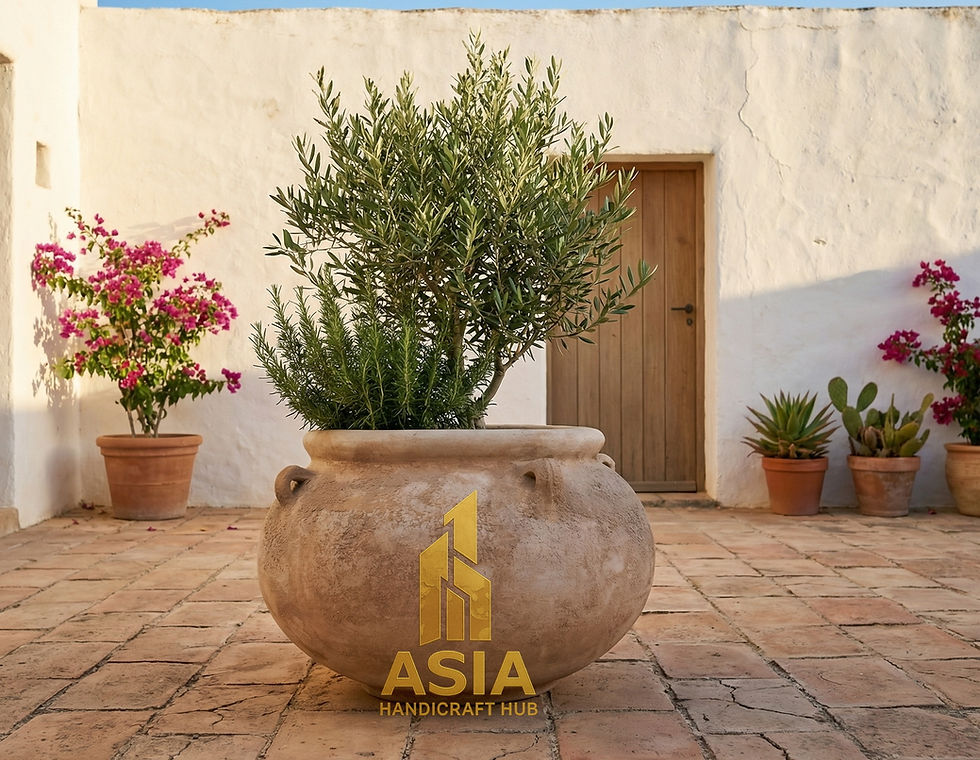
Oversized Statement Planters
Large outdoor planters are increasingly used in:
Hotels
Restaurants
Commercial landscaping projects
Luxury residential developments
Oversized planters create strong visual impact and often command higher retail pricing.
Aged Patina and Vintage-Inspired Collections
Weathered finishes and antique-inspired surfaces continue growing in popularity.
These designs combine traditional aesthetics with modern outdoor styling trends.
Lightweight Contemporary Planters
Consumers increasingly value planters that are easier to move and maintain.
This has increased demand for lightweight planter materials and modern composite solutions.
Vietnamese Pottery Products Seeing the Highest Export Demand
Global demand for Vietnamese pottery products continues expanding across multiple categories.
Outdoor Garden Planters
Outdoor ceramic planters remain one of Vietnam’s strongest export categories due to the growth of landscaping and outdoor living markets.
Terracotta Pottery
Terracotta continues attracting environmentally conscious consumers who appreciate natural materials and traditional aesthetics.
Glazed Ceramic Pottery
Glazed ceramics appeal to premium retail markets because of their decorative flexibility and wide color range.
Lightweight Polystone Planters
Lightweight outdoor planters are increasingly popular due to easier shipping, handling, and cold-weather performance.
Handmade Decorative Pottery
Artisan-inspired pottery collections continue performing strongly in boutique home décor and luxury retail markets.
Polystone vs Terracotta Planters for Outdoor Use
One of the most common questions among buyers is whether terracotta or polystone planters perform better for outdoor applications.
The answer depends on climate conditions, customer preferences, and retail positioning.
What Are Terracotta Planters?
Terracotta planters are made from natural clay fired at relatively lower temperatures compared to glazed ceramics.
Their porous structure allows air and moisture movement, which many gardeners appreciate for plant health.
Terracotta is highly valued for:
Natural appearance
Breathability
Traditional garden aesthetics
Organic texture
However, terracotta may absorb water more easily than other materials.
What Are Polystone Planters?
Polystone planters are composite products typically made from resin combined with stone powder or fiberglass materials.
These planters are designed to replicate the appearance of stone or ceramic while reducing weight and improving durability.
Polystone is popular because it offers:
Lightweight handling
Modern appearance
Strong weather resistance
Reduced cracking risk
Durability Comparison Between Polystone and Terracotta
Terracotta
Advantages:
Natural and breathable
Timeless appearance
Eco-friendly material perception
Limitations:
Higher water absorption
Greater risk of cracking in freezing temperatures
Heavier weight in larger sizes
Polystone
Advantages:
Better frost resistance
Lower moisture absorption
Lightweight structure
Easier transportation
Limitations:
Less traditional appearance
Different texture compared to natural clay
Which Material Performs Better in Cold and Wet Climates?
For regions with heavy rain, snow, or freeze-thaw cycles, polystone planters are often more practical because they absorb less moisture and are less likely to crack.
Terracotta performs better in warm, dry, or Mediterranean-style climates where freeze damage is less common.
Many retailers now offer both materials to serve different customer preferences and climate conditions.
Sustainable Pottery Manufacturing in Vietnam
Sustainability is becoming increasingly important in the global home décor and garden industries.
Many retailers now prioritize suppliers that demonstrate environmentally responsible manufacturing practices.
Why Sustainability Matters in Pottery Manufacturing
Consumers increasingly value products made with responsible sourcing and environmentally conscious production methods.
For B2B buyers, sustainable manufacturing can strengthen brand positioning and support long-term retail growth.
Sustainable Raw Materials Used in Pottery Manufacturing
Many factories are improving sustainability through:
Responsible clay sourcing
Recycled material integration
Eco-friendly glaze development
Reduced chemical usage
Energy-Efficient Production Processes
Modern pottery factories are also investing in:
Energy-efficient kilns
Waste heat recovery systems
Water recycling processes
Production waste reduction
These improvements help reduce environmental impact while improving production efficiency.
How Sustainability Benefits Wholesale Buyers
Environmentally responsible products increasingly align with consumer purchasing preferences.
Retailers that offer sustainable pottery collections may benefit from:
Stronger brand perception
Greater consumer trust
Improved product differentiation
Better alignment with retail sustainability initiatives
How to Choose the Right Vietnamese Pottery Supplier for Your Business
Choosing the right supplier requires evaluating much more than pricing alone.
The best supplier partnerships combine quality, reliability, communication, and long-term business support.
Questions Buyers Should Ask Before Importing
Before selecting a manufacturer, buyers should assess:
Production capacity
Export experience
Product consistency
Quality control systems
Packaging standards
Customization capabilities
Lead time reliability
Key Factors for Long-Term Supplier Relationships
Strong supplier partnerships are often built on:
Clear communication
Reliable production schedules
Continuous product innovation
Flexible customization support
Shared long-term business goals
Common Mistakes First-Time Buyers Should Avoid
Choosing Based Only on Price
Extremely low prices can lead to hidden quality and durability problems.
Ignoring Packaging Quality
Weak packaging significantly increases breakage risk during international shipping.
Skipping Sample Approval
Production samples help verify dimensions, glaze quality, and structural durability before mass manufacturing begins.
Underestimating Freight Costs
Outdoor planters are bulky products, so container optimization and logistics planning are essential.
Conclusion
For global buyers searching for reliable outdoor ceramic planter suppliers in Vietnam, working with experienced export-oriented partners can significantly improve sourcing efficiency, product consistency, and long-term retail performance.
Asia Handicraft Hub continues supporting wholesalers, garden retailers, importers, and sourcing companies with customized outdoor pottery collections, export-ready manufacturing coordination, and scalable planter solutions tailored for international markets.
Vietnam continues strengthening its position as one of the world’s leading sourcing destinations for outdoor ceramic planters, terracotta pots, and decorative pottery products.
For wholesale buyers, garden retailers, and importers, Vietnamese manufacturers offer a valuable combination of craftsmanship, scalable production, customization flexibility, and competitive pricing.
At the same time, evolving consumer preferences are creating new opportunities for custom planter collections, sustainable pottery products, and climate-specific outdoor solutions.
Whether buyers are sourcing rustic terracotta pottery, modern glazed ceramics, oversized commercial planters, or lightweight polystone collections, choosing the right supplier and material strategy is essential for long-term retail success.
By understanding manufacturing quality, planter durability, climate suitability, and market trends, buyers can build stronger product collections that meet the evolving demands of today’s global garden and outdoor living markets.
Frequently Asked Questions (FAQ)
How do I find reliable wholesale terracotta pot suppliers in Vietnam?
Look for suppliers with strong export experience, consistent quality control systems, professional packaging standards, and clear communication processes. Requesting product samples before placing bulk orders is highly recommended.
Are Vietnamese outdoor ceramic planters suitable for cold climates?
Some outdoor ceramic planters are designed for cold-weather use, especially products fired at higher temperatures with durable glaze finishes. However, buyers should confirm frost resistance with suppliers before importing.
What is the difference between terracotta and polystone planters?
Terracotta planters are made from natural clay and offer breathable, traditional aesthetics. Polystone planters are lightweight composite products designed for improved durability and weather resistance.
Can Vietnamese factories produce custom outdoor ceramic planters?
Yes. Many Vietnamese manufacturers offer OEM and private-label production services, including custom shapes, glaze colors, logo applications, and packaging.
Which outdoor planter styles are trending in garden retail?
Modern minimalist planters, rustic terracotta collections, aged patina finishes, oversized statement planters, and lightweight contemporary designs are among the strongest current trends.
What makes pottery manufacturing more environmentally sustainable?
Sustainable pottery production may include responsible clay sourcing, recycled materials, energy-efficient kiln systems, water recycling, and reduced manufacturing waste.
Why are Vietnamese ceramic planters popular among global importers?
Vietnamese suppliers offer a strong balance between craftsmanship, customization capabilities, export experience, competitive pricing, and broad product diversity.


Comments