
Balcony Pots: Large Containers for Urban Container Gardening
Updated: Aug 17
Table of Contents
1. The Real Challenge of Balcony Gardening (And Why the Pot Is the Starting Point)
Urban gardening is, at its core, an exercise in constraints. No ground soil. Structural weight limits. Wind exposure above street level. Sun that arrives at angles no gardening book was written for. And the kind of limited square footage where every planting decision gets amplified — a dead plant in a prominent pot is impossible to ignore.
Most balcony gardening advice focuses on what to plant. That's the wrong starting point.
The container you choose determines almost everything that follows: what you can grow, how long the plant stays healthy, how the space looks through different seasons, and how much maintenance you're taking on. A beginner buying a small, shallow pot for a fruit tree, or placing a heavy ceramic planter on a balcony with a 150kg/m² load limit — these are mistakes that feel obvious in retrospect and invisible before they happen.
This guide focuses on large containers specifically. Not the window box. Not the 20cm pot on a ledge. The real statement planters — 40cm, 50cm, 60cm+ — that anchor a balcony garden, create visual structure, and give plants the root space they actually need to thrive.
Get the container right and the rest of urban container gardening becomes much more manageable.
2. How Large Should a Balcony Pot Actually Be?
The instinct to buy small containers for a small space is understandable. It's also almost always wrong.
Small pots dry out fast — a critical problem on exposed balconies where wind accelerates evaporation and summer sun bakes the soil. They restrict root growth, which caps plant size and health. And they rarely provide the visual grounding that makes a balcony feel like a deliberate outdoor space rather than an afterthought.
Here's a practical size guide based on what you're trying to achieve:
For trees, large shrubs, or climbers: minimum 50cm diameter, 50cm depth. Olives, bay trees, Japanese maples, wisteria trained on a wall — all of these need genuine root space to establish and thrive. Anything below 40cm and you're fighting the plant's instincts every season.
For mixed perennial planting (the "thriller, filler, spiller" approach): 40–50cm diameter works well for a central statement pot with supporting smaller containers around it.
For herbs, salads, and shallow-rooted annuals: 30–40cm is fine, though wider is always better for moisture retention. Depth matters less here than it does for deep-rooting plants.
For vegetables: deeper than you think. Tomatoes need 40cm depth minimum; courgettes want 50cm+. The "you can grow anything in a container" claim is true — but only if the container is actually big enough.
The honest answer to "how large?" is usually: bigger than you were planning. The extra volume of soil is an asset. It buffers temperature fluctuations, retains moisture longer, and gives roots somewhere to go when conditions get difficult.
3. Material Guide: Which Container Works Best on a Balcony?
Every balcony pot material has a genuine use case. The choice isn't about which material is "best" in the abstract — it's about which works best for your specific conditions.
Ceramic and Glazed Pottery
The visual benchmark. Nothing else in the container market delivers the same combination of weight, texture, colour depth, and finish quality. Glazed ceramics work especially well on balconies because the glaze seals the surface — better moisture retention than unglazed alternatives, and more resistance to the salt staining that urban air and rain can cause.
The downside is weight. A 50cm glazed ceramic pot can weigh 15–25kg empty. With soil and a planted tree, you're looking at 40–60kg for a single planter. Structural assessment of the balcony before placing large ceramics is not optional — it's necessary.
Terracotta
A classic for good reasons. Terracotta breathes — the porous clay allows gas exchange through the pot wall, which benefits root health. It's also beautiful in a way that ages rather than deteriorates: the surface develops character over seasons, accumulating mineral deposits and weathering into something that looks deliberately old.
The limitation is moisture: terracotta dries out faster than glazed ceramics, which means more frequent watering on exposed balconies. In frost-prone climates, standard terracotta can crack — though high-fired terracotta (often imported from Italian or Vietnamese production) handles frost significantly better.
Fibreglass and Composite
The practical choice where weight is the primary constraint. Fibreglass planters can be manufactured to convincingly mimic ceramic, stone, or concrete finishes at a fraction of the weight — a 60cm fibreglass planter might weigh 5–8kg versus 20–30kg for equivalent ceramic. For upper-floor balconies with strict load limits, fibreglass is often the only viable option for large statement pots.
Quality matters significantly in this category. Good fibreglass is indistinguishable from ceramic at arm's length. Poor fibreglass looks exactly like what it is — plastic pretending to be something else.

Zinc and Metal Planters
A specific aesthetic: industrial, contemporary, urban. Metal planters heat up in direct sun (potentially damaging to roots — always line with insulating material or use a pot-within-pot approach) and can rust unless properly treated. But for the right balcony aesthetic, a large zinc planter is genuinely hard to replicate with other materials.
Self-Watering Containers
Worth mentioning separately because they solve a real balcony problem: consistent moisture in an environment where you might be away for days at a time. Self-watering containers have a reservoir in the base that wicks water upward through capillary action. For vegetable growing in particular, they significantly reduce the maintenance burden.
4. Ceramic and Terracotta Pots for Balconies: Pros, Cons, and When They Shine
Because ceramic and terracotta dominate the upper end of the balcony planter market — and because Asia Handicraft Hub's product range focuses specifically here — this category deserves a closer look.
What makes a good ceramic balcony pot?
The quality indicators are specific. Glaze coverage should be even across the entire exterior surface with no bare patches or thin spots where moisture can penetrate. The drainage hole should be clean and consistent — a cracked or uneven drainage hole is a structural weak point that can extend to the base over time. The pot should sit flat without rocking, and the wall thickness should feel consistent when you tap around the circumference.
For balcony use, firing temperature matters more than it does indoors. A pot that will face rain, temperature swings, and UV exposure needs to have been fired at high enough temperature to vitrify (partially seal) the clay body. Lower-fired ceramics absorb more moisture — and moisture inside a ceramic pot wall, freezing and expanding, is how cracking happens.
The Vietnamese ceramic advantage
Vietnam has been producing ceramic pottery for export for decades. The craft traditions in Vietnamese pottery regions — particularly in areas like Bat Trang — involve techniques and aesthetics that produce genuinely distinctive results. Vietnamese manufacturers working in the export market have developed the quality control to back up the visual product: consistent glaze formulations, reliable firing temperatures, and packing standards that get large statement pots to international buyers undamaged.
For balcony gardeners sourcing their own pots, Vietnamese ceramics increasingly appear in premium garden retailers and independent homeware stores. For trade buyers and retailers, direct import from Vietnamese wholesale suppliers is where the margin is.
When terracotta beats ceramic on a balcony
Root health. If the plant you're growing is sensitive to waterlogging — lavender, rosemary, olives, succulents, Mediterranean herbs as a category — the breathability of terracotta is genuinely beneficial. A glazed ceramic pot with good drainage handles most plants well. But for plants that want dry-side conditions, the gas exchange through terracotta walls is a plant health advantage that no amount of good drainage can fully replicate.
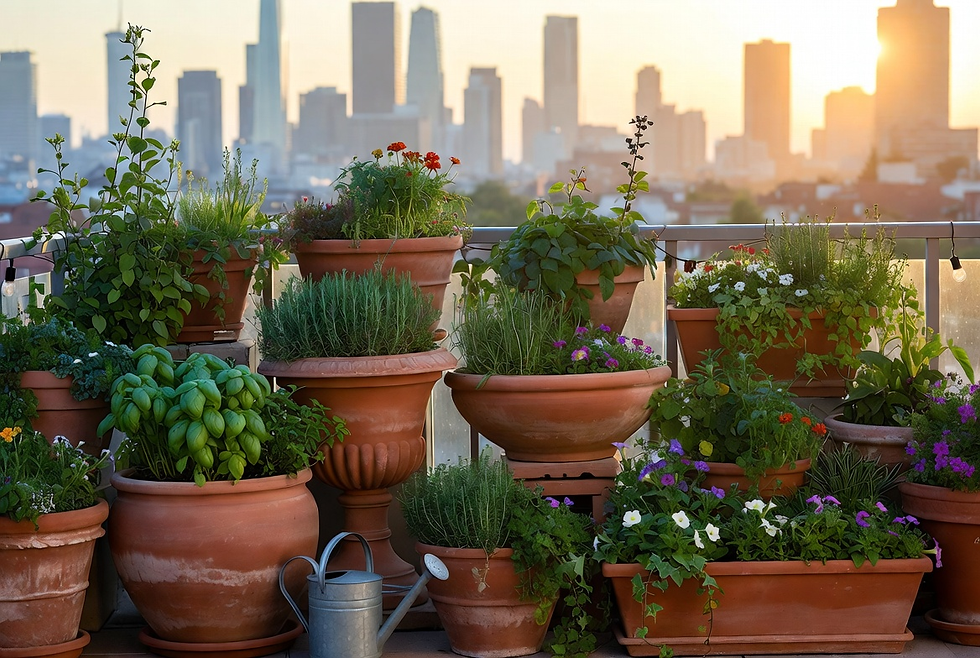
5. Weight and Load: The Practical Constraint Every Balcony Gardener Must Know
This section is not optional reading. It's the section where balcony gardening crosses from aesthetic decisions into structural ones.
Standard residential balconies in modern apartment buildings are typically designed to a load capacity of 150–300 kg/m². Older buildings may be lower. The issue is that a planted large container gardening setup can get heavy very quickly:
A 50cm ceramic pot: 18–22 kg
35 litres of damp potting mix: 35–45 kg
A mature olive tree in a 60cm pot with moist soil: 70–90 kg total
Three statement pots like this on a 4m² balcony represents a load of 210–270 kg concentrated in a relatively small area, likely near the balcony edge where cantilever loads are highest.
Practical guidance:
First, know your balcony's rated load capacity — this is in your lease, building management documentation, or can be provided by a structural engineer.
Second, distribute weight. Place large pots along the structural wall edge rather than the balcony railing edge. Load-bearing walls carry weight more safely than the cantilevered portion of a balcony slab.
Third, use weight-reducing strategies where necessary: fibreglass pots instead of ceramic, perlite mixed into the potting medium to reduce soil density, lightweight proprietary potting mixes designed for container gardening.
Fourth, if in doubt, consult a structural engineer. A one-hour consultation costs a fraction of the liability of structural damage.
6. Drainage Done Right: The Detail That Kills Most Balcony Gardens
Waterlogging kills more container plants than any other cause. It's quiet — the plant looks fine, then looks a bit off, then is dead, and by the time you notice, root rot has been happening for weeks.
On a balcony, drainage has two dimensions: drainage within the pot, and drainage off the balcony surface.
Within the pot:
Every large container needs at least one drainage hole, ideally two or three for pots above 50cm. The holes need to stay unblocked. The instinct to place a layer of gravel or pot shards at the base to "improve drainage" is, frustratingly, a myth — research on container soil science consistently shows that a layer of coarse material at the base actually raises the perched water table within the pot, keeping soil wetter for longer. The right solution is a well-structured potting mix that drains freely throughout, without an artificial base layer.
Pot feet — small risers that elevate the container base off the balcony floor — are not decorative. They ensure drainage holes don't become blocked against a flat surface. Every large balcony pot should have them.
Off the balcony:
Water draining from large containers has to go somewhere. On a shared balcony or apartment building, this is a genuine consideration. Drainage saucers catch the excess but fill up quickly during heavy rain — a 60cm pot in a summer downpour will overflow a standard saucer. Self-draining saucer systems, elevated pot platforms with drainage channels, or simply positioning pots near balcony drain points are all sensible approaches.
Check your building's rules on water runoff from balconies. Some buildings have specific requirements. This is boring but worth knowing before you install a large container garden.
7. What to Grow in Large Balcony Containers
This is the part most balcony gardeners want to skip straight to. Fair enough. Here's what actually works in large containers on an urban balcony:
Trees and large shrubs (50cm+ pots)
Olive trees are the canonical balcony tree for good reason. They tolerate dry conditions between watering, handle wind exposure well, grow slowly enough to stay manageable, and look good year-round. Choose a container-appropriate variety rather than a full-size grove olive.
Bay laurel is underrated as a balcony tree. Evergreen, aromatic, useful in the kitchen, and genuinely hardy. Bay can be clipped into formal shapes — standard lollipop or cone — that look deliberate in a container.
Japanese maple — particularly compact varieties like 'Inaba-shidare' or 'Garnet' — brings seasonal drama. Spectacular in autumn, interesting structure in winter, delicate new growth in spring. Needs shade from intense afternoon sun on exposed balconies.
Citrus (lemon, kumquat, calamondin) work in sheltered, sunny positions and bring fragrance when flowering. They need protection below about 5°C, which means wintering indoors in most northern European climates.
Climbers and wall plants (deep containers against a railing or wall)
Clematis, jasmine, climbing roses, and wisteria can all be grown in large containers against a trellis or trained along a railing. They need more water than most container plants, but the vertical dimension they add to a balcony is hard to achieve any other way.
Vegetables (the case for going big)
A 60cm diameter, 50cm deep container is enough to grow a surprisingly productive vegetable garden. Tomatoes, courgettes, climbing beans, chard, kale, aubergines — all viable in genuinely large containers. The key variable is consistent water: vegetables growing hard in a container will fail fast if they dry out during fruit development.
Mediterranean herbs (terracotta pots, full sun)
Rosemary, thyme, sage, oregano, lavender — all perform better in terracotta than in glazed ceramic because of the breathability. They want sun, good drainage, and to be slightly neglected rather than watered too frequently. A cluster of terracotta pots in different sizes, planted with Mediterranean herbs, is one of the lowest-maintenance balcony garden setups you can build.
8. Styling a Balcony with Large Pots: Design Principles That Actually Work
Container gardening at the balcony scale is as much interior design as it is horticulture. The containers are the architecture; the plants are the furnishing.
Odd numbers work better than even
Three pots read as a deliberate grouping. Four reads as two pairs. Five is better than four. This isn't a rule — it's a tendency in visual perception that applies equally to planting design and furniture arrangement.
Vary height, not just size
A collection of pots at the same height reads flat. Add a tall statement pot on a pedestal or a natural stone riser, a medium planter at floor level, and a small accent pot at an intermediate height. The visual rhythm created by varying heights is what makes a balcony garden feel structured rather than cluttered.
Limit your pot palette
Using three or more different pot materials and finishes on a small balcony creates visual noise. Two materials at most — ceramic and terracotta work together naturally — and limit your glaze colours to two or three at most. Restraint reads as intentional; variety reads as indecision.
Use large containers as anchors
In any planting scheme, there should be one or two pots that clearly dominate — larger, more statement-quality, positioned at the strongest visual points on the balcony. Everything else supports them. This hierarchy is what prevents a collection of plants from becoming a jumble.
Think seasonally
A well-designed balcony garden looks intentional in winter as well as summer. Large evergreen structural pots — an olive, a clipped bay, a specimen grass — hold the space when seasonal annuals are gone. Build your permanent structure first; add seasonal colour as the layer on top.
9. Where to Source Large, Quality Balcony Pots — Retail and Trade
For individual gardeners, the challenge is finding large statement pots that don't look like they came from a garden centre clearance shelf. The size range above 50cm is where domestic retail selection gets thin quickly — most high-street garden centres stock up to 40cm reliably; above that, the range narrows and prices climb steeply.
Options for individual buyers:
Independent garden centres with a strong pottery buyer tend to carry better product in larger sizes than chains. Specialist pottery importers selling direct-to-consumer online are increasingly viable — though buying a large ceramic pot you've only seen photographed carries some risk. If possible, handle the pot before you buy it.
For trade buyers, retailers, and garden centres:
The large-format balcony planter category is where direct import from wholesale suppliers creates the most value. A 55cm glazed ceramic statement pot that retails at £80–£120 in a garden centre can be sourced at wholesale from a Vietnamese supplier for a fraction of that — the margin difference is the commercial case for direct import.
Vietnamese wholesale suppliers like Asia Handicraft Hub carry exactly the large-format ceramic and terracotta pots that are hardest to source domestically at sensible trade prices. The range includes statement-scale glazed ceramics, textured terracotta in larger formats, and specialist collections in finishes — volcanic glaze, opal glaze, aged patina — that create genuine product differentiation in a retail environment.
For trade buyers assessing a wholesale relationship, the key questions around large pots specifically are: How are they packed for container shipping (damage rates on large ceramics matter more than on small ones)? What's the frost resistance rating? Are drainage hole dimensions consistent? And can you see samples before committing to a container order? A credible wholesale supplier has clear answers to all four.
FAQs: Balcony Pots and Urban Container Gardening
Q: What size pot is best for a balcony garden?
A: For structural statement plants — trees, large shrubs, climbers — 50cm diameter and 50cm depth is the practical minimum. For mixed herbaceous planting, 40cm works. For herbs and shallow-rooted annuals, 30cm is acceptable, though larger is always better for moisture retention. The most common mistake is choosing pots that are too small for the plant's root requirements.
Q: Can I use large ceramic pots on a balcony?
A: Yes, with a weight check first. A 50cm glazed ceramic pot filled with moist soil and a planted specimen can weigh 50–70kg. Before placing multiple large ceramic planters on a balcony, confirm your balcony's load capacity — typically found in building documentation or available from a structural engineer. Distribute pots along the structural wall edge rather than at the railing.
Q: How do I prevent my balcony pots from drying out in summer?
A: Choose the largest containers you can accommodate — more soil volume means slower drying. Use a quality loam-based or moisture-retentive potting mix. Mulch the soil surface with gravel or bark to reduce evaporation. Elevate pots on feet to prevent blocked drainage without eliminating it. For vegetables and moisture-hungry plants, consider self-watering containers with integrated reservoirs.
Q: Do I need drainage holes in balcony planters?
A: Yes, without exception. Standing water in a container without drainage will kill most plants through root rot, regardless of how expensive the pot was or how carefully you water. All large balcony containers need at least one drainage hole, pot feet to keep holes clear, and ideally a saucer to catch runoff without causing it to pool against the pot base.
Q: Are terracotta pots good for balconies?
A: For Mediterranean plants and anything that prefers drier conditions, terracotta is genuinely better than glazed ceramic because of its breathability. The limitations are moisture loss (more frequent watering needed on exposed balconies) and frost sensitivity in colder climates. High-fired terracotta from Vietnam or Italy handles frost significantly better than low-fired alternatives.
Q: What plants are easiest to grow in large balcony containers?
A: For low maintenance: olive trees, bay laurel, agapanthus, ornamental grasses, lavender, rosemary. For productive gardening: tomatoes, climbing beans, chard, and courgettes in deep containers. For seasonal drama: Japanese maples, tulip bulbs in autumn-planted pots, dahlias in summer. Avoid plants that produce invasive root systems — they'll exhaust a container faster than you expect.
Q: How do I protect large ceramic pots from frost damage?
A: Use high-fired ceramics wherever possible — these have a denser, less porous clay body that absorbs less moisture and therefore less frost damage. Move vulnerable pots to a sheltered position or indoors during hard frosts. Wrap pots in horticultural fleece or bubble wrap during cold snaps. Ensure drainage is excellent so no water pools inside the pot during freezing weather.
Q: Can I grow vegetables on a balcony in large containers?
A: Yes, and more productively than most people expect — if the containers are genuinely large. Tomatoes need 40cm depth minimum; courgettes and squash want 50cm+. The yield from a well-managed 60cm container planting can be substantial through summer. The critical variable is consistent watering: vegetables in containers on exposed balconies dry out fast and need attention daily in summer.
Q: What's the difference between pots for balconies and pots for ground-level gardens?
A: Primarily weight tolerance and wind exposure. Balcony gardens need to respect structural load limits, so weight matters more than in a ground-level setting. Wind is typically stronger at elevation, which increases moisture loss from both plant and soil and can physically damage tall, top-heavy plants. On a balcony, choose lower and wider pot shapes over tall narrow ones, and stake taller plants more firmly than you would at ground level.
Q: Where can I source large statement pots for balcony retail displays?
A: For trade buyers and garden centre buyers, the best large-format balcony pots at viable wholesale prices come from direct import through specialist suppliers. Asia Handicraft Hub supplies large-format glazed ceramics and terracotta from Vietnam, with the full range of sizes, finishes, and packing standards that UK and international trade buyers need. Contact us to discuss your range requirements.
About Asia Handicraft Hub
Asia Handicraft Hub is a Vietnam-based wholesale supplier of ceramic plant pots, terracotta planters, and artisan handicrafts — working with trade buyers, garden centres, landscape contractors, and retailers across the UK, Europe, Australia, and beyond.
Our ceramic and terracotta pot range includes everything from compact indoor planters to large-format outdoor statement containers — the 50cm, 60cm, and 70cm glazed ceramics that drive premium retail sales and that are genuinely difficult to source at sensible trade prices through domestic suppliers.
We offer consistent quality, real product knowledge, and pricing that leaves room for retail margin. Our collections include reactive glaze, opal glaze, volcanic glaze, aged patina, and hand-thrown terracotta finishes — product that looks different on a retail floor because it is different, made by craftspeople with a genuine pottery tradition behind them.
For trade and wholesale enquiries — including MOQ, lead times, packing specifications, and sample requests — contact us directly.
Asia Handicraft Hub Website: www.asiahandicrafthub.com
Ceramic Collection: www.asiahandicrafthub.com/vietnam-pottery
Terracotta Collection: www.asiahandicrafthub.com/vietnam-terracotta-pots
We'd rather talk through your requirements specifically than send a generic catalogue. Get in touch.


Comments